Case Study · Heavy Oil
SAGD process water: hydrocarbons, barium, strontium.
Treatability study for a Calgary-based heavy oil producer. Combined boiler blow-down water and SAGD process water from a Northern Alberta operation, treated with Powell Water E-Cell electrocoagulation. Targets included extractable petroleum hydrocarbons, dissolved barium and strontium, and total suspended solids.
The sample
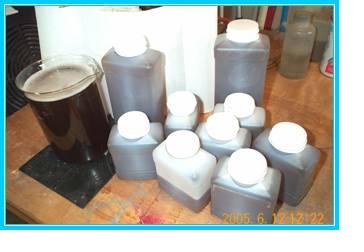
N.E.A.T. Environment received samples of oily water from a Calgary-based heavy oil producer for the purpose of developing an E-Cell treatment process. The waste stream was a combination of boiler blow-down water and SAGD process water, combined for the bench treatability study.
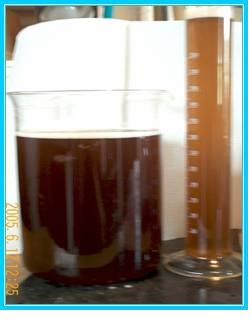
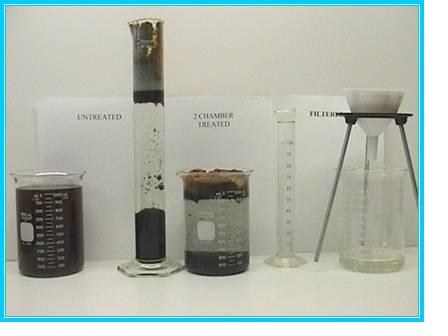
The raw water had a distinct oily smell and showed no settlement of suspended solids during a 24-hour rest period in a beaker and column — characteristic of a stably emulsified hydrocarbon-water mixture that conventional gravity separation can't handle.
The treatment
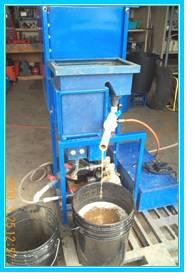
NEAT shipped samples to the Powell Water manufacturing and laboratory facility in La Grande, Oregon, where they were processed through a 1.5 litre/minute E-Cell unit. Both raw samples and treated samples were sent for lab analysis covering heavy metal reduction and extractable petroleum hydrocarbons.
Findings from Powell Water
The test report from Dennis Rasmussen of Powell Water Systems noted several important characteristics of this waste stream:
- The water can be treated at nearly any current density setting and blade configuration — it is that reactive and conductive. The implication for full-scale design is that the operating window is wide, so the equipment configuration can be chosen for cost and maintenance rather than for narrow process tolerance.
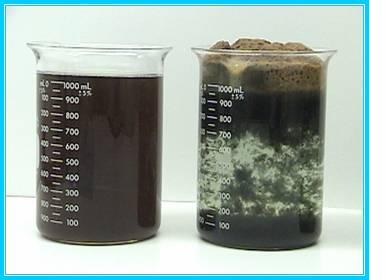
- There was no indication of free oil or hydrocarbon in the EC-treated water — no rainbow sheen on the surface of the treated water samples, even when examined closely.
Conclusions
The initial treatments showed strong reduction of heavy metals, total suspended solids, turbidity, and extractable petroleum hydrocarbons. Additional treatments would be required to fully develop the treatment process for production use — the initial work confirmed feasibility and identified the operating window, but a full system design would require characterizing the variability in the producer's actual operational waste stream over time.
For SAGD operations facing increasing regulatory pressure on produced water disposal and steam-cycle blow-down management, electrocoagulation provides a route to treat both streams in a single system — with the treated water suitable for either compliant disposal or reuse in non-critical applications.