Case Study · Chromate Plating
PPI Chromate: from dark blue waste to compliance.
A specialty chromate plating shop in Lynnwood, Washington provided two one-gallon samples of high-chromium process water. Single-step KB-1 silica micro-encapsulation, with prior pH adjustment from 2.15 up to 4.00, reduced metals concentrations below regulatory limits.
The sample
Initial waste plating process water was collected by Chromate Plating Shop in two one-gallon jugs and picked up by Keeco personnel. Ken Gardner of N.E.A.T. Environment collected the samples at the Keeco shop in Lynnwood, Washington and transported them to the Kelowna facility, where the bench test was performed.
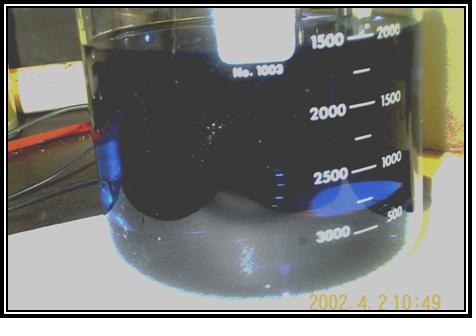
The water was dark blue with no suspended solids and would not settle on its own when given an hour to do so — characteristic of dissolved-metal contamination rather than particulate loading. Raw water analysis showed zinc at 580 mg/L, Cr³⁺ at 590 mg/L, iron at 130 mg/L, and pH of 2.15.
The treatment
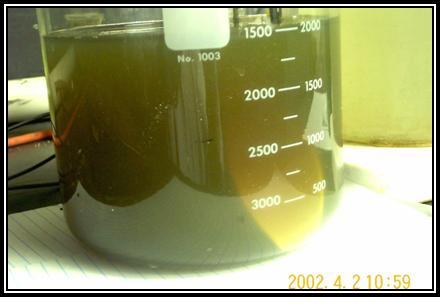
A 2-liter sample was decanted into a treatment beaker. The pH was adjusted from 2.15 to 4.00 with 1.1 grams of caustic; as the caustic was added the water shifted to olive green and produced a light floc. With pH stable at 4.00, KB-1 silica micro-encapsulation chemistry was introduced.
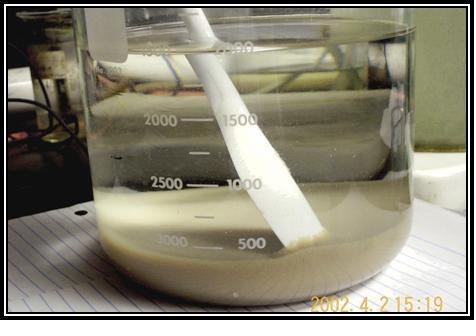
The first KB-1 addition (1.5 grams in 25 mL of tap water, added as a slurry under continuous hand-stirred agitation) brought the pH to 4.30. A second 1.5-gram addition followed 35 minutes later. The KB-1 silica matrix formed rapidly, encapsulating the dissolved metals into a sand-like sediment that settled out cleanly.
Results
Treated water samples were analyzed by International Metallurgical & Environmental, Inc. (IME). All metal concentrations dropped below regulatory limits in a single-step treatment. The treated sludge passes leach tests for non-hazardous landfill disposal.
The chemistry handles dissolved chromium directly, without requiring the Cr⁶⁺ to Cr³⁺ reduction step needed for highly oxidized chromate waste. For chromate shops with mixed waste containing both Cr⁶⁺ and high zinc concentrations, this single-step approach simplifies treatment significantly.